



Imagine your electric car isn’t just sitting in your driveway overnight, sipping power. Imagine it’s an active partner in running your home—a giant, rolling battery that can power your fridge during a blackout, sell energy back to the grid when prices are high, and even smooth out your monthly utility bill. That’s the promise of vehicle-to-grid, or V2G, technology. And honestly, it’s not some distant sci-fi dream. It’s starting to happen now, and it’s poised to completely reshape how we think about home energy management.
From Garage to Grid: What V2G Actually Is
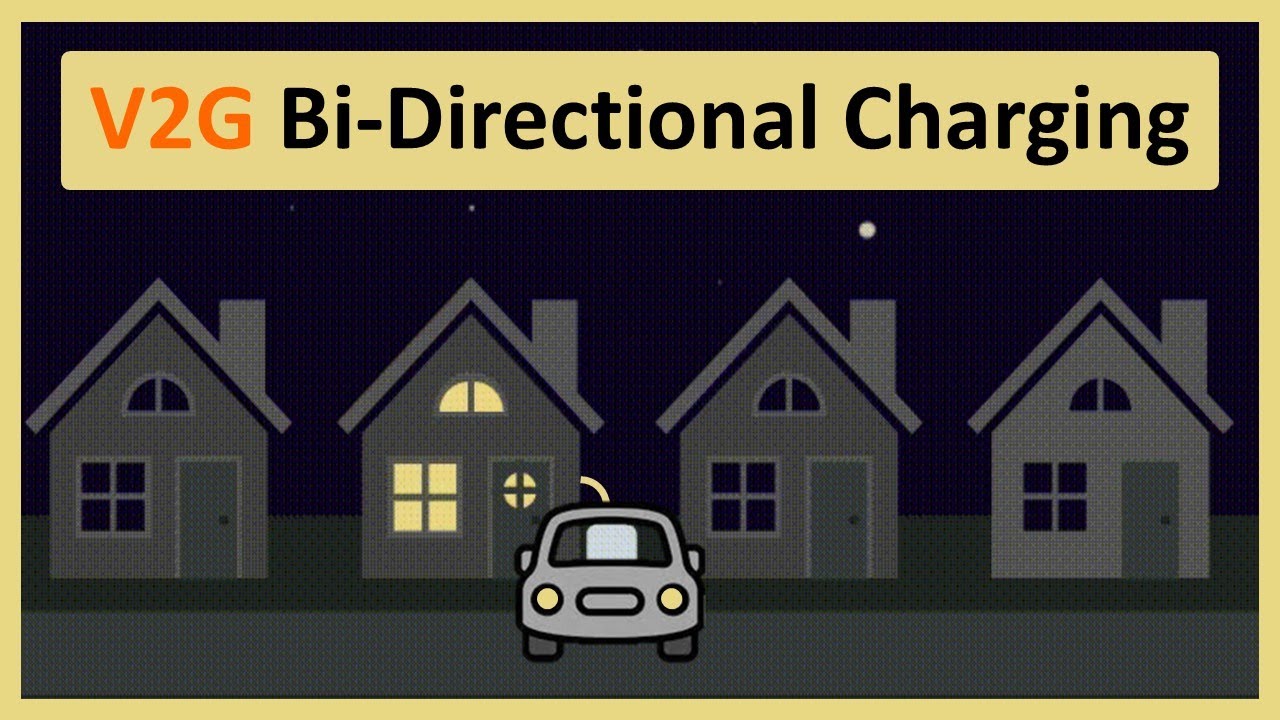
Let’s break it down simply. Most EVs today are one-way streets: grid-to-vehicle (G2V). You plug in, you charge up, you drive. V2G flips the script, creating a two-way street. It allows your EV’s battery to discharge energy back to your home (V2H) or to the local power grid (the full V2G).
Think of it like a home battery system—a Tesla Powerwall, for instance—but with wheels. The average EV battery holds 60-100 kWh of energy. That’s enough to power a typical U.S. home for two to three days. It’s a massive, untapped resource parked right outside. The trick is the hardware and software to manage the flow safely and intelligently.
The Tangible Impact on Your Home Energy System
So, what does this mean for you, day-to-day? The impact is more than just theoretical. It’s practical, and in some cases, already financial.
1. Peak Shaving and Cost Savings
Here’s the deal: electricity isn’t one flat price. Utilities charge more during “peak” hours—usually late afternoon and early evening when demand is highest. With a V2G setup, your home energy management system can be programmed to draw power from your car during those expensive peak times, instead of from the grid. This is called “peak shaving.”
You effectively use your car as a buffer, buying low (charging overnight) and using high. The result? A noticeably lower electricity bill. For folks on time-of-use rates, the savings can really add up.
2. Uninterruptible Power Supply (UPS) & Resilience
With extreme weather causing more frequent outages, home backup power has moved from a luxury to a major concern for many. V2G, specifically in V2H mode, turns your EV into a whole-home backup generator. When the grid goes down, your system automatically isolates your home and powers critical circuits—or even the entire house—from the car’s battery.
No more spoiled food. No more scrambling for a noisy gas generator. Just seamless, silent backup power that you already own. That’s a game-changer for home energy security.
3. Integrating with Renewables
If you have rooftop solar, V2G becomes even more powerful. Sure, you can store excess solar energy in a home battery. But what if that battery is also your car? On a sunny day, your panels might produce more than your home needs. Instead of sending it all back to the grid for a modest credit, you can charge your EV with that free, clean power.
Better yet, you can store that solar energy in the car and use it to power your home at night. This maximizes your self-consumption of solar energy and moves you closer to true energy independence. It closes the loop in a beautifully efficient way.
The Flip Side: Challenges and Considerations
It’s not all smooth sailing, of course. Widespread V2G adoption faces some real-world hurdles. Let’s be honest about them.
Battery Degradation Worries: This is the big one. People naturally worry that constantly cycling their EV battery—charging and discharging it for grid services—will wear it out faster. Automakers and researchers are actively working on smart software that optimizes for battery health, only participating in V2G when it’s truly beneficial and within safe parameters. The key will be proving that the financial rewards outweigh any minimal, managed degradation.
Hardware and Standards: Not every EV or charger is V2G-capable. You need a specific bidirectional charger and a compatible vehicle (the Nissan Leaf and some Ford F-150 Lightning models are early leaders). The industry is still settling on communication standards, which creates a bit of a fragmented market right now.
Grid Coordination & Incentives: For the full V2G potential, utilities need to play ball. They need to create attractive programs that pay homeowners for the grid-stabilizing services their cars can provide. Think of it like a distributed, virtual power plant. Progress is being made, but it’s uneven across different regions.
The Future Home: A Networked Energy Ecosystem
Looking ahead, V2G isn’t a standalone gadget. It’s a core component of the future smart home. Your home energy management system will become the brain, orchestrating between your solar panels, your home battery (if you have one), your smart appliances, your EV, and the grid.
It might work like this: On a windy night, grid power is cheap and clean. Your system charges the car to 80%. The next afternoon, a heatwave drives peak prices up. Your system powers the home from the car, avoids running the AC at its most expensive moment, and maybe even sells a tiny bit back. Then, it forecasts your driving needs for tomorrow and ensures you have enough charge by morning.
This isn’t just about saving a few bucks—though that’s a great perk. It’s about creating a resilient, efficient, and adaptive energy system right where we live. Our homes become active nodes in a cleaner grid, rather than passive consumers.
The impact of V2G on home energy management, then, is fundamentally about transformation. It transforms a depreciating asset (your parked car) into a dynamic energy resource. It transforms your home from a grid endpoint into an interactive hub. And it transforms our relationship with energy from one of mere consumption to one of participation. That’s a shift worth plugging into.